Advertiser disclosure: this is paid advertising created by Evolance Wellness, which sells one of the products named in this article. It provides general product and label information, not medical advice.
Why “taking magnesium” and getting magnesium are two different things
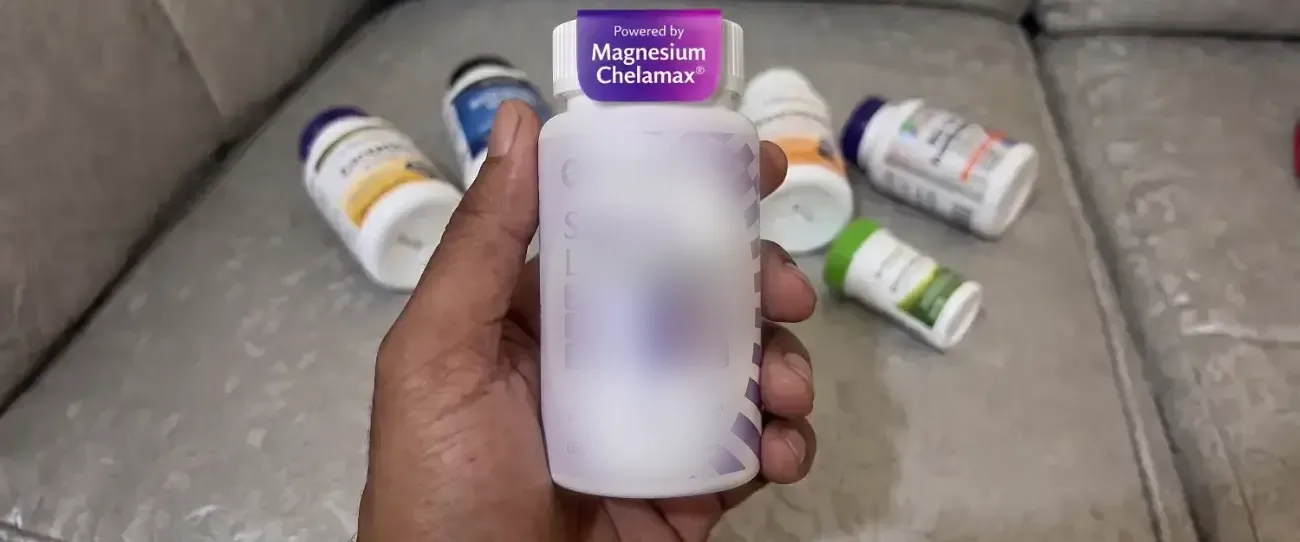
Researchers measured the magnesium Americans actually buy. The drugstore standby: about 4% absorbed.[1] The front of the bottle never mentions it — and the “glycinate” upgrade you were told to buy has a problem of its own. And the “glycinate” upgrade you were told to buy has a problem of its own.
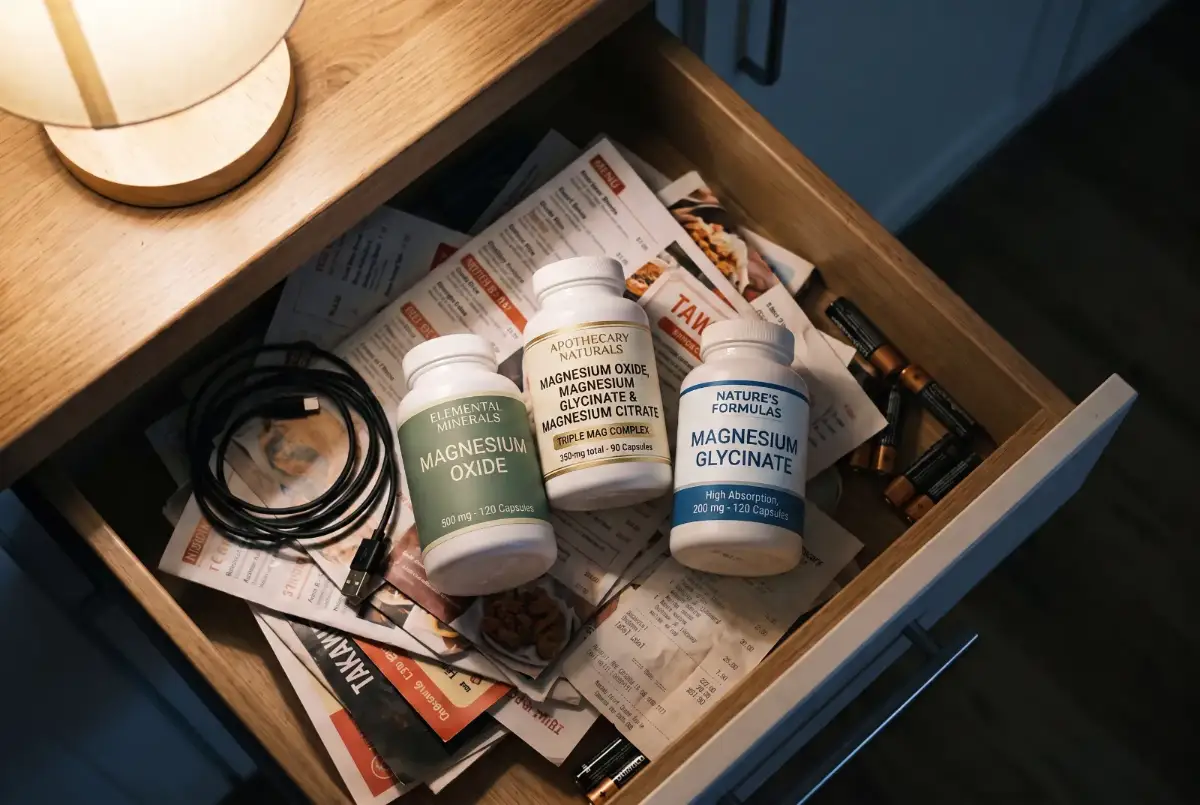
Magnesium oxide — the cheap default in mass-market bottles — showed a fractional absorption of about 4% in normal volunteers.[1]
✓
Front-label numbers can quote the compound or the mineral — and don't have to say which. Only the Supplement Facts panel declares the elemental magnesium per serving. That's the number to compare.
✓
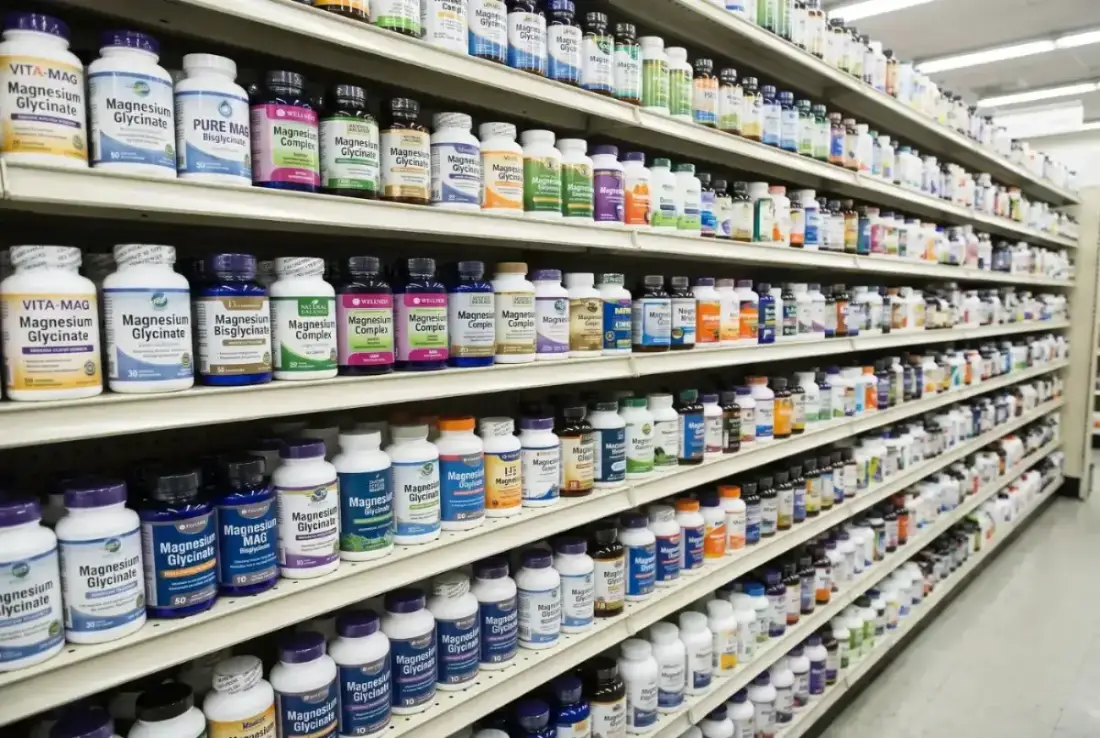
“Glycinate” costs nothing to print. Unless the label names the material and the manufacturer, there's nothing to check it against.
✓
If magnesium “did nothing,” the bottle is the first place to look. Not your body.
You took it for a month and felt nothing. Took it for ten days and mornings got urgent. Finished a whole bottle and couldn't tell the difference. Or you never stopped — and still can't say whether it works.
Different story, same ending: maybe nothing works on me.
There's a decent chance that wasn't yours to carry. Two bottles can print the same number on the front and deliver wildly different amounts. What separates them is on the back — and you're about to learn to read it.
You did not waste money on magnesium. You may have paid for a number.
02The evidence
What the researchers actually measured
12
Mg
Magnesium
24.305
In 2001, two physicians at a Department of Veterans Affairs medical centre took four magnesium products people were actually buying, gave them to volunteers, and measured how much showed up in their urine — the standard proxy for how much got absorbed.
4%
Fractional absorption of magnesium oxide in normal volunteers. Firoz & Graber, Magnesium Research, 2001.[1]
And it isn't one lonely paper. A decade earlier, researchers at UT Southwestern ran citrate against oxide in volunteers. Over four hours, the citrate group's urinary magnesium rose more than 30× as much.[2] The same team found magnesium oxide “virtually insoluble in water.”[2]
The thing you swallowed barely dissolved. So why is it on every shelf?
✕The first villain
Milligram Theater
Magnesium oxide is cheap in bulk and dense — a high percentage of the compound is magnesium by weight. So a manufacturer can put an enormous, impressive-looking number on the front of a bottle for almost nothing.
The big number on the front isn't a promise. It's a prop.
Nobody is breaking a law. Every milligram claimed is genuinely in there. It simply doesn't go far.
The doorway the oxide form never found
Here's what bisglycinate (a.k.a. glycinate) means: the magnesium is wrapped in two amino acids. Think of it like a VIP pass — instead of waiting in the same slow line as oxide, it gets escorted through a separate entrance your gut already keeps open.
The cheap form · oxide
It has to dissolve first
Magnesium oxide has to dissolve in stomach acid before any of it can cross into you. Oxide barely dissolves. What doesn't dissolve never crosses — it sits in your gut and pulls water in.
That's how a laxative works.
The chelated form · bisglycinate
It carries its own key
Bisglycinate doesn't need to dissolve first. The amino-acid wrapping acts like a key to a side door — a dedicated entrance your body already uses to absorb amino acids.
Part of it appears to be carried through the gut wall intact.
Same mineral. Different door.
Why “glycinate” proves nothing
Word got out that bisglycinate was the good stuff, and “glycinate” started appearing on the front of bottles everywhere. Which brings us to the second villain — the slipperier one, because it's wearing the first one's disguise.
✕The second villain
Glycinate Theater
“Glycinate” is not a regulated claim. No rule requires a brand to demonstrate that the magnesium in that capsule is actually bonded to those amino acids, or to keep batch nine matching batch one.
A brand can print the word because a supplier said so on an invoice. Period.
So the premium you pay for “glycinate” buys a word on a label — not a document, not a test, not a specification anyone has to stand behind.
A claim you can't check isn't chemistry. It's copywriting.
Which is why one thing makes the word mean something: a branded, verified chelate with a named manufacturer behind it — a company with a published specification to defend and a trademark to lose.
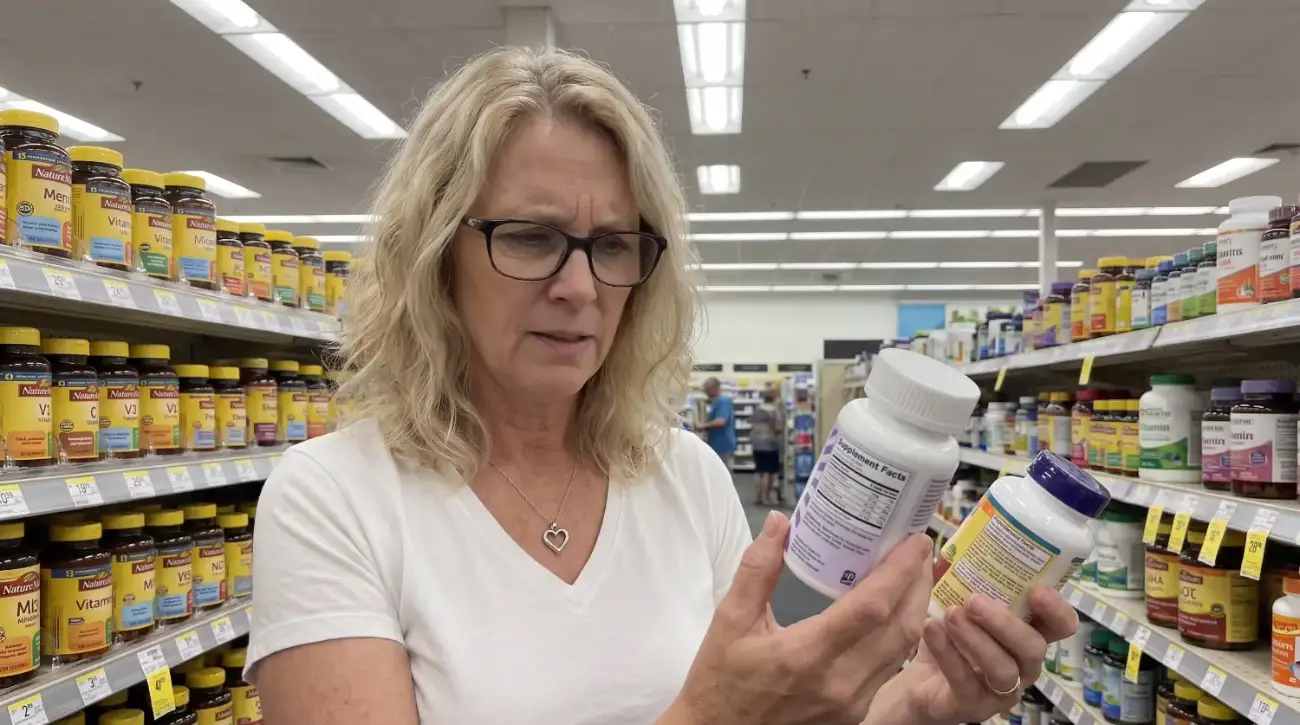
The front sells you. The back is where they have to answer. Every check that follows happens on the Supplement Facts panel.
Why: front-label numbers are marketing. The panel is where the actual contents are declared.
02
Find the form name.
Look in the ingredient line, usually in parentheses after “Magnesium.”
Oxide: the form measured at about 4% absorption.[1] It barely dissolves, and what doesn't dissolve doesn't get in — that's the laxative effect.[3]
Citrate: better absorption in the research,[2] but not chelated — still dependent on dissolving.
Glycinate or bisglycinate: the chelated form. Finding the word isn't the end, though — check 05 tells you whether it means anything.
03
Find the elemental magnesium number.
A front label can quote the compound weight or the mineral weight, and doesn't have to say which — so front numbers can't be compared. The Supplement Facts panel always means the mineral itself.
04
Check the serving size.
One capsule or two? If the panel says two and you take one, you're getting half of every number on that panel.
05
Find who made the raw material.
Not the brand on the front — the company that actually manufactured the chelate. Look for a trademarked ingredient name (usually with ® or ™) on the panel or in “Other Ingredients.”
A named, trademarked material: you have a manufacturer to look up and a published process to read.
Only “magnesium glycinate,” nobody named: you have the word and nothing to check it against.
06
Read every active dose.
If the label says “proprietary blend,” you get the total and they hide the split. Nobody hides numbers they're proud of.
!The arithmetic test
If the compound figure and the mineral figure are the same number, one of them is wrong — the compound always weighs more than the mineral inside it. A bottle printing “400 mg” in both columns is arithmetic that cannot work.
Run those six on whatever bottle you have. You'll know more about that bottle than the brand wants you to.
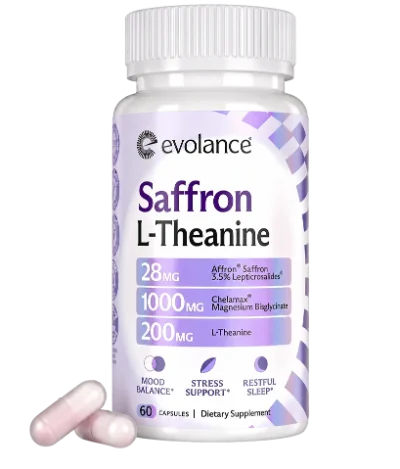
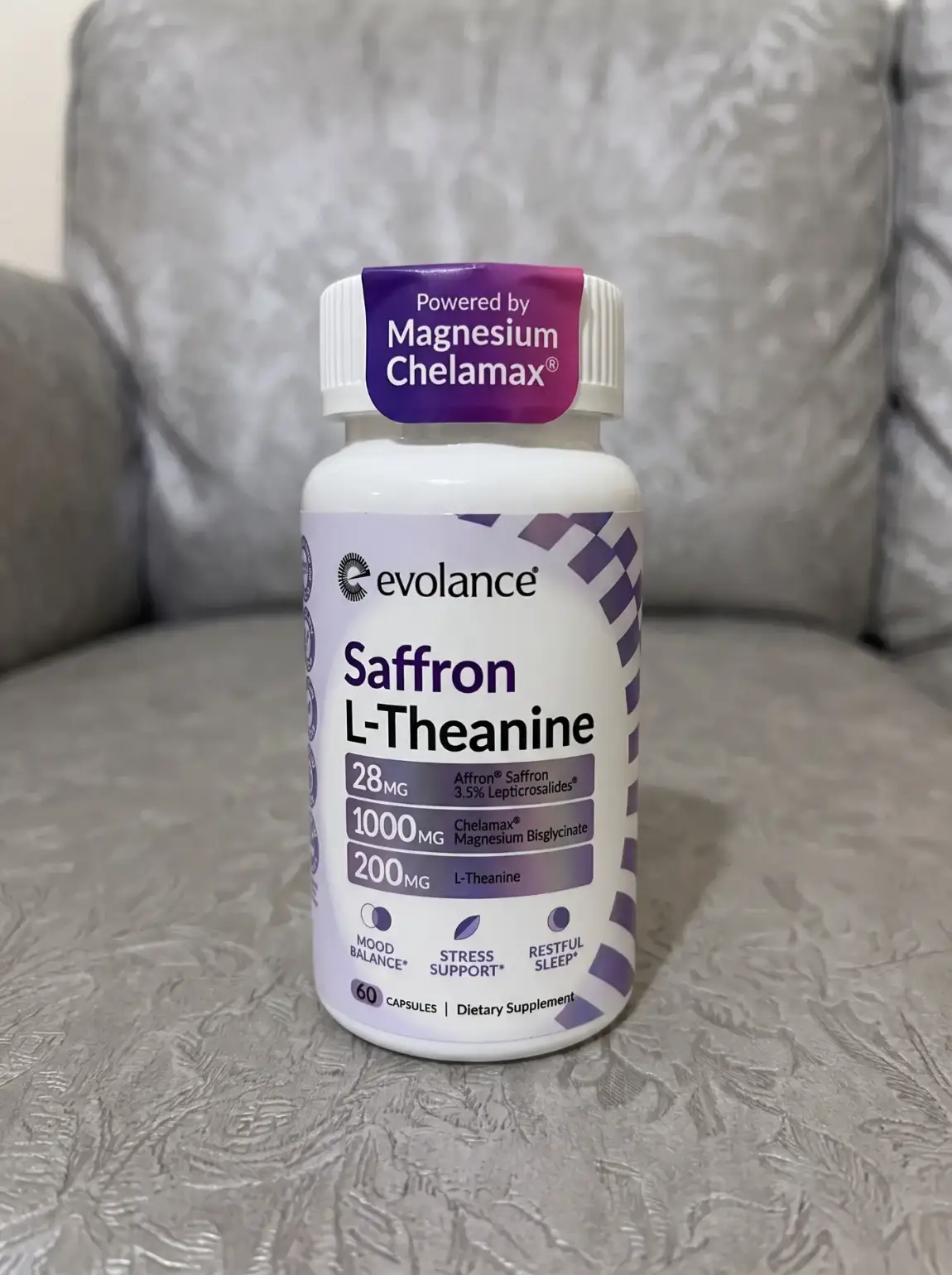
Chelated magnesium bisglycinate · every dose printed on the label · 90-day money-back guarantee
Magnesium supports normal muscle function and a healthy nervous system as part of a balanced diet.*
Descriptions of what each ingredient supports refer to that ingredient individually and are not a claim of a combined or synergistic effect of the finished formula.
Now run the same checks on the rest of the aisle
Swipe to compare →
What you're checking
The routineCalm+Rest
Drugstore oxide
Unnamed “glycinate”
The form on the panel
✓Chelamax® bisglycinate, named on the panel
✕Oxide — about 4% absorbed[1]
✕Unnamed material
Is the chelation verified?
✓Three-step process, published
–n/a
✕Nothing to check
Elemental magnesium disclosed
✓220 mg · 52% DV
✕Buried in the compound
–Varies
Studied saffron dose
✓Affron® 28 mg[4][5]
–n/a
–n/a
Every dose printed, no blend
✓Every dose
✕Often blended
✕Often blended
One more piece of arithmetic before you compare elemental numbers across the aisle: 400 mg of oxide, at the roughly 4% fractional absorption measured for that form, works out to about 16 mg absorbed — from the bottle with the biggest number on the shelf.[1] 220 mg of a verified chelate is a different arithmetic.
Comparison is between ingredient forms and disclosed label practices as reported in the cited research — not a claim about any specific competing brand, and not a comparison of finished products. The absorption figures describe the ingredients studied in those papers; no cited study tested Evolance Calm+Rest.
05The full picture
Why a better magnesium still isn't the whole answer
The night you're trying to fix isn't just a body that won't settle. It's a mind that won't stop narrating, and a day's worth of stress still running in the background.
Magnesium supports the first one.* It was never built to handle all three. That's why Calm+Rest is three ingredients, not one:
Body
Magnesium bisglycinate, 220 mg elemental
Supports normal muscle function and a healthy nervous system — the physical settling.*
Mind
L-theanine, 200 mg
The amino acid from tea, studied in adults for relaxation and stress-related measures.[6] For the nights when the body is still but the mind keeps talking — calm without sedation, and quieter racing thoughts.*
Mood
Affron® saffron, 28 mg
The exact daily amount used in placebo-controlled human trials of this branded extract, for mood[4] and self-reported sleep quality.[5] The steadier mood underneath it all.*
Two capsules. One routine — instead of three bottles and three schedules.
06What people say
What people say once they switch
“Tried oxide for years and felt nothing. This was different.”
MMark G.Verified Purchase
“Solved my sleep issues.”
GGayle K.Verified Purchase
“Works quickly. Before I know it, I'm absolutely relaxed.”
GGreg M.Verified Purchase
“Sleep without feeling groggy in any way.”
JJamie K.Verified Purchase
Individual results vary. These are individual customers' own experiences and are not typical of, and do not represent or guarantee, the results any other person will achieve.
The 90-Night Promise
Calm+Rest carries a 90-day money-back guarantee. Take it for three months; if the evenings aren't different, one email to Evolance gets the money back — and the bottle doesn't have to be shipped back either. Evolance is currently running 30% off on subscription orders, cancellable at any time, which makes this the cheapest the decision gets. Current pricing and full terms are on the product page.
Who this is for — and who it honestly is not
It's built for you if
✓
Done buying on faith: you already take magnesium and you want to know what you're actually getting.
✓
You check things: you want a verified chelate with the elemental dose printed where you can read it.
✓
One routine, not three: body, mind and mood side of the evening covered in one step.
✓
Off the melatonin cycle: you want out of it rather than deeper into it.
✓
Exact doses: every number printed, instead of a blend that hides the math.
It's honestly not for you if
✕
You want a knockout: a sedative or an instant lights-out. This isn't that.
✕
You want a guarantee: a promised result overnight. Individual experience varies, full stop.
✕
You want the cheapest: the lowest-priced single-ingredient magnesium on the shelf. That product exists.
✕
You should ask first: you're pregnant, nursing, under 18, or taking medication — particularly antidepressants or sleep aids. Talk to your healthcare professional.
Straight answers
“I've tried magnesium. Why would this be different?”
Look at what you tried. If the panel says oxide, you were taking the form measured at about 4% fractional absorption in volunteers.[1] This is a branded, verified bisglycinate chelate at 220 mg elemental. Whether it changes your experience is individual — but it's a different starting point, and you can verify it instead of hoping.
“My bottle already says magnesium glycinate. So I'm fine, right?”
Maybe. The label won't tell you either way — it doesn't name who made the magnesium or whether anyone verified the batch. Look for a branded material you can look up. If the panel names nothing, you bought a word. (Check 05 above walks you through exactly what to look for.)
“Is 1,000 mg what I actually get?”
No — and now you're asking the right question. 1,000 mg is the compound. 220 mg is the elemental magnesium, 52% of the Daily Value. That's the comparable number. And when you compare it, run the same arithmetic on the other bottle: 400 mg of oxide at the roughly 4% absorption measured for that form is about 16 mg.[1] A big elemental number in the wrong form is still Milligram Theater.
“What if it does nothing for me either?”
Then it costs one email inside 90 nights. The money comes back and the bottle stays with you. That's the entire risk — set it against what has already been spent proving that oxide doesn't work.
07Two paths
Two Paths From Here
01
Path one — another restless night
You close this page. Tonight looks like last night: a tired body, a mind that keeps narrating, and the same bottle earning one more night of doubt.
02
Path two — a routine built for the full picture
You choose a named bisglycinate with a disclosed elemental dose, plus L-theanine and Affron® — with 90 nights to decide and nothing to ship back if you do.
Only one of those two costs you nothing to be wrong about.
You know what to check now. This one was built to pass it. Ninety nights, nothing to ship back — the only thing left is to start.
30% off applies to subscription orders, cancellable at any time · 90 nights to decide · keep the bottle · one-time purchase also available at full price · current terms on the product page
About this report
By the Trusted Selections Wellness editorial team
Every absorption figure in this article is taken from the papers listed below, not from front-label claims. The citations are complete, with PMIDs, so you can read them yourself.
References
Firoz M, Graber M. (2001). Bioavailability of US commercial magnesium preparations. Magnesium Research, 14(4):257–262. PMID: 11794633.Bioavailability of four commercial preparations measured as the increment in urinary magnesium excretion in normal volunteers given approximately 21 mEq/day. Reported “relatively poor bioavailability of magnesium oxide (fractional absorption 4 per cent),” with significantly higher and equivalent bioavailability from magnesium chloride, lactate and aspartate.
Lindberg JS, Zobitz MM, Poindexter JR, Pak CY. (1990). Magnesium bioavailability from magnesium citrate and magnesium oxide. J Am Coll Nutr, 9(1):48–55. PMID: 2407766.In vitro solubility plus in vivo absorption in normal volunteers. Magnesium oxide was “virtually insoluble in water” and only 43% soluble in simulated peak acid secretion. Urinary magnesium increment over the four hours after a 25 mmol load: 0.22 (citrate) vs 0.006 (oxide) mg/mg creatinine, p < 0.05.
Schuette SA, Lashner BA, Janghorbani M. (1994). Bioavailability of magnesium diglycinate vs magnesium oxide in patients with ileal resection. JPEN, 18(5):430–435. PMID: 7815675.Double-blind randomised crossover, 12 patients with ileal resection, ²⁶Mg-labelled supplements. Group-wide absorption did not differ (23.5% chelate vs 22.8% oxide). In the four patients with the greatest impairment on oxide, absorption from the chelate was substantially greater (23.5% vs 11.8%, p < .05), was better tolerated by all patients, peaked significantly earlier, and produced a greater area under the enrichment-versus-time curve. Authors concluded some portion of magnesium diglycinate is absorbed intact, probably via a dipeptide transport pathway. Small study in a special population.
Kell G, Rao A, Beccaria G, Clayton P, Inarejos-García AM, Prodanov M. (2017). affron®, a novel saffron extract, improves mood in healthy adults over 4 weeks in a double-blind, parallel, randomized, placebo-controlled clinical trial. Complement Ther Med, 33:58–64. PMID: 28735826.
Lopresti AL, Smith SJ, Metse AP, Drummond PD. (2020). Effects of saffron on sleep quality in healthy adults with self-reported poor sleep: a randomized, double-blind, placebo-controlled trial. J Clin Sleep Med, 16(6):937–947. PMID: 32056539.
Evans M, Sulley A, Kitchen A, et al. (2021). A randomized, triple-blind, placebo-controlled, crossover study to investigate the efficacy of a single dose of AlphaWave® L-theanine on stress in a healthy adult population. Neurol Ther, 10(2):1061–1078. PMID: 34562208.
Advertiser disclosure
This content is paid advertising created by and for Evolance Wellness, which manufactures and sells Evolance Calm+Rest. It provides general product and label information, not medical advice. Comparisons are made between ingredient forms and disclosed label practices as reported in the cited research; they are not claims about any specific competing brand or product.
All research cited here was conducted on individual ingredients — magnesium forms, the branded saffron extract Affron®, and L-theanine — and not on Evolance Calm+Rest as a finished formula. Individual experience varies.
See the #1 pick→30% off on subscription · cancel anytime90-day money-back guarantee